
An office move is not only about getting desks, chairs and boxes from one place to another. The real value is in making sure everything reaches the right person, room, team or storage area in a way that is easy to unpack.
Clear organisation depends on planning before the first crate is moved. With the right labelling, department separation and move sequence, a removal team can help a business keep track of its contents from collection through to placement.
Why organisation matters during an office move
In a business setting, every item usually has a purpose and an owner. Files, marketing materials, accounts records, meeting room equipment, stock, stationery, furniture and archive boxes all need to be placed where they can be used again quickly. If items are packed without a clear system, staff may spend valuable time searching for what they need after the move.
Good organisation also reduces confusion on move day. A removal team should not have to stop repeatedly to ask where every crate belongs. Likewise, staff should not need to supervise every single item. A clear system gives everyone a shared reference point.
This is especially useful when several departments are moving at once. Sales materials may need to stay separate from finance records. Human resources files may need careful handling. Shared equipment may need to go to a central area rather than an individual workspace. When these decisions are made early, the move becomes much easier to manage.
For larger workplace projects, a structured commercial removals service can help keep the physical move aligned with the way the business actually works.
Creating a clear crate labelling system
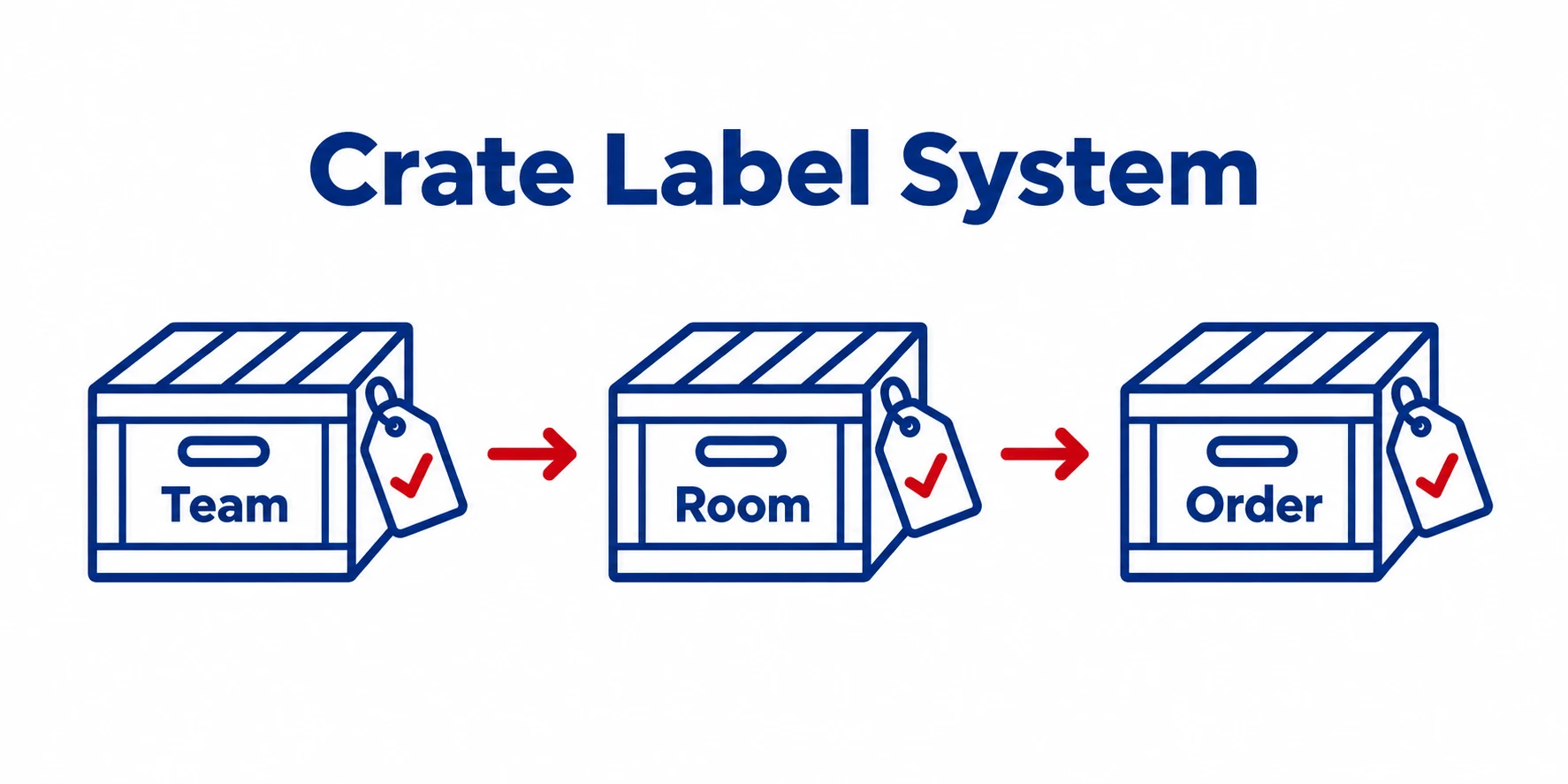
Crate labelling is one of the simplest ways to protect order during an office move. The best systems are easy to read, easy to repeat and understood by both the business and the removal team.
A useful label normally identifies the department, destination area, staff member or team, and any special handling note. For example, a crate may be marked for finance, workstation three, or meeting room storage. The exact wording matters less than consistency. If one team uses names, another uses room numbers and another uses informal notes, the system becomes harder to follow.
Colour coding can help when it is used carefully. Each department or floor can be assigned a colour, with matching labels on crates and destination areas. This gives the move team a quick visual cue. However, colour should support written information rather than replace it, because labels still need to be clear if lighting, distance or similar colours cause confusion.
Numbering is also helpful. If a staff member has six crates, numbering them one of six, two of six and so on makes it easier to see whether anything is missing at the destination. For shared areas, numbering by zone can help the team keep stockroom contents, stationery, archives and kitchen items separate.
Labels should be placed where they are visible when crates are stacked. A label hidden on the underside or covered by another crate slows the process down. Strong labels, clear writing and a simple naming structure all make the move more efficient.
Keeping departments and functions separate

Department separation starts before packing. Each team should know what is moving, what is staying, what can be recycled, and what needs to be kept accessible until the last working moment. This avoids mixed crates and uncertain ownership.
One practical approach is to treat each department as its own move zone. The contents of that zone are packed, labelled and moved together where possible. This helps prevent items from drifting into the wrong part of the new workspace.
Shared spaces need their own plan as well. Meeting rooms, reception areas, kitchens, filing rooms and storage cupboards can easily become catch all areas during a move. Giving each shared area a named category makes it easier to decide where its contents should go.
It is also worth agreeing who has responsibility for checking each zone before the move begins. A department contact can confirm that crates are labelled correctly, confidential items are handled appropriately and essential materials are not packed too early. This does not need to be complicated, but it gives the removal team a clear point of contact.
If a business is still in the earlier planning stage, guidance on how to prepare for an office move can sit alongside the crate and department planning work.
Sequencing the move so items arrive in the right order
Move sequencing is the order in which items are packed, loaded, transported and placed. It matters because the first items loaded are not always the first items needed. A well planned sequence helps the destination take shape in a logical order.
Large furniture, storage units and core workstations often need to be positioned before crates are delivered to desks or department areas. If crates arrive before the destination is ready, they may have to be moved twice. That creates extra handling and can make the space harder to organise.
Some contents should be grouped by when they are needed. Everyday desk items may need to be available quickly. Archive materials can usually be placed later. Shared supplies may need to be delivered to central areas once the main layout is in place. The removal team can then work through the move in a way that supports the restart of normal activity.
Sequencing also helps when the move is split across phases. A business may move one department before another, or move storage areas separately from active workspaces. In those cases, crate labels and loading plans should reflect the phase as well as the destination.
This is different from broader planning around lost working time, but the two are connected. For businesses thinking about the wider schedule, Parkers Removals also has a useful guide to minimizing downtime during your office move.
Managing small items, shared equipment and loose contents
Small items are often where organisation breaks down. Desk accessories, cables, stationery, remote controls, keys, chargers, samples and small office tools can end up loose unless they are given a clear place.
The safest approach is to pack small contents into named crates or sealed bags inside crates, with a label that identifies where they belong. Desk items should stay with the relevant person or workstation. Shared items should go into a crate for the room or function they support.
Loose equipment should not be treated as an afterthought. Printers, label machines, lamps, screens, mail room items and presentation equipment all need clear ownership. If an item is shared, the label should point to the destination area rather than a person.
It is also helpful to separate items that need checking on arrival. For example, a team may want to inspect cabinet keys, access cards, specialist supplies or important files before unpacking everything else. Labelling these as priority contents can help them surface at the right moment.
Where only a few pieces need moving separately, advice around moving just a few items may be useful for understanding how smaller business loads can still be handled with care.
How businesses can help the removal team keep order
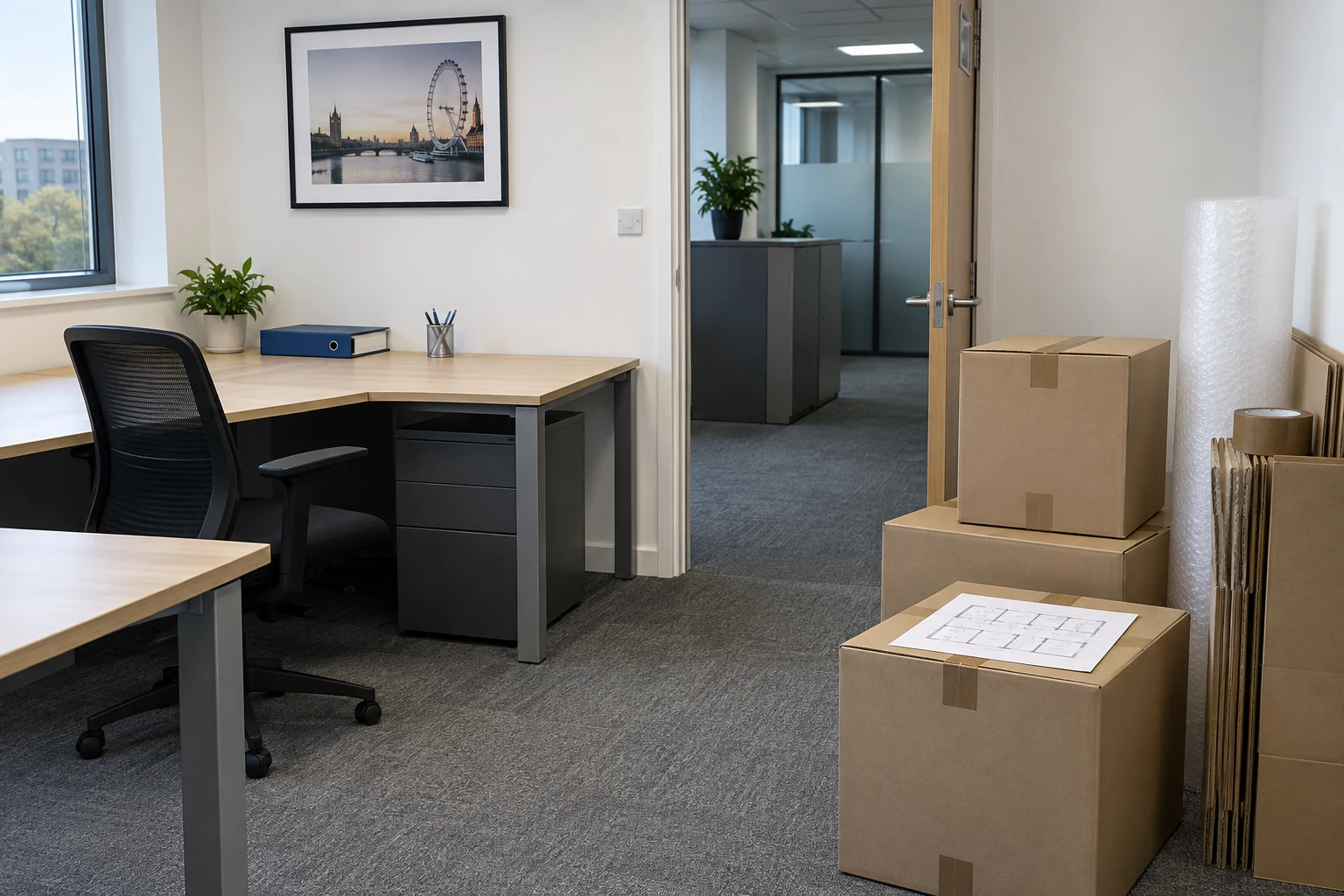
A removal team can bring structure, crates and practical experience, but the best results come when the business prepares clear information. The team moving the contents needs to understand the destination layout, the department names, the priority areas and any items that need special attention.
A simple move plan can make a big difference. This may include a floor plan, a department list, crate label guidance and contact names for each area. It does not need to be over complicated. It just needs to give the removal team enough detail to place items correctly without guesswork.
Before move day, staff should be told how to label their crates and what should not be packed. Personal items, confidential records and essential documents may need separate instructions. Shared cupboards and storage areas should be assigned to someone, otherwise they can be missed or packed inconsistently.
At the destination, clear signs or matching labels can help the removal team identify the correct room, department or workstation. This keeps placement accurate and prevents crates being gathered in one general area.
Finally, allow time for a final check. Walking through each zone with the move lead helps confirm that the right items have been moved, priority crates are visible and any follow up questions are dealt with quickly.
- A clear crate labelling system helps every item reach the right department, person or shared area.
- Department separation prevents files, supplies, equipment and furniture from being mixed during packing and unloading.
- Move sequencing helps furniture, crates and priority contents arrive in a practical order.
- Small items need just as much structure as larger furniture because they are easy to misplace.
- Simple information from the business helps the removal team place contents accurately.
Frequently asked questions
What should be included on an office removals crate label?
A useful label should include the department, destination area, staff member or shared function, plus any priority or special handling note. Consistency matters more than complex wording.
How can departments stop their items getting mixed together?
Give each department its own packing zone, crate labels and contact person. Shared spaces should also be labelled as separate zones so their contents do not get absorbed into nearby departments.
Should office crates be numbered?
Numbering is a good idea, especially when one person or team has several crates. It makes it easier to check that everything has arrived and to spot anything that may need attention.
Who decides the order that office contents are moved in?
The move sequence is usually agreed between the business and the removal team. It should reflect the destination layout, the priority items and which areas need to be ready first.
Plan an organised office move
If your business needs a careful, well structured move, Parkers Removals can help plan the packing, labelling and movement of office contents with calm, practical support.