
A piano is more than a heavy item of furniture. It is a finely built instrument with delicate internal parts, polished surfaces and real sentimental value.
So, can a removal company move a piano without damaging it? Yes, with the right experience, planning and equipment, professional movers can greatly reduce the risk and help your piano arrive safely.
Why pianos need specialist handling
Pianos are awkward to move because their weight is not always evenly distributed. Upright pianos can be extremely heavy at the back, while grand pianos have legs, pedals and lids that need careful protection. Even a short move through a hallway can involve tight turns, thresholds, steps and door frames.
The main risks are usually knocks to the casework, strain on legs or pedals, damage to walls and floors, or unnecessary movement inside the instrument. This is why a piano should not be treated like a standard sideboard or cabinet. It needs a planned route, enough trained hands and the correct moving equipment.
An experienced team offering professional piano removals will look at the piano type, the access at both properties and the best way to protect the instrument before it is lifted. That preparation is what makes the biggest difference.
How professional movers reduce the risk of damage
A careful piano move usually starts before moving day. The removal company may ask for details such as the piano style, approximate size, floor level, parking access, steps, narrow corridors and whether there are any sharp turns. Photos can also help the team understand the route.
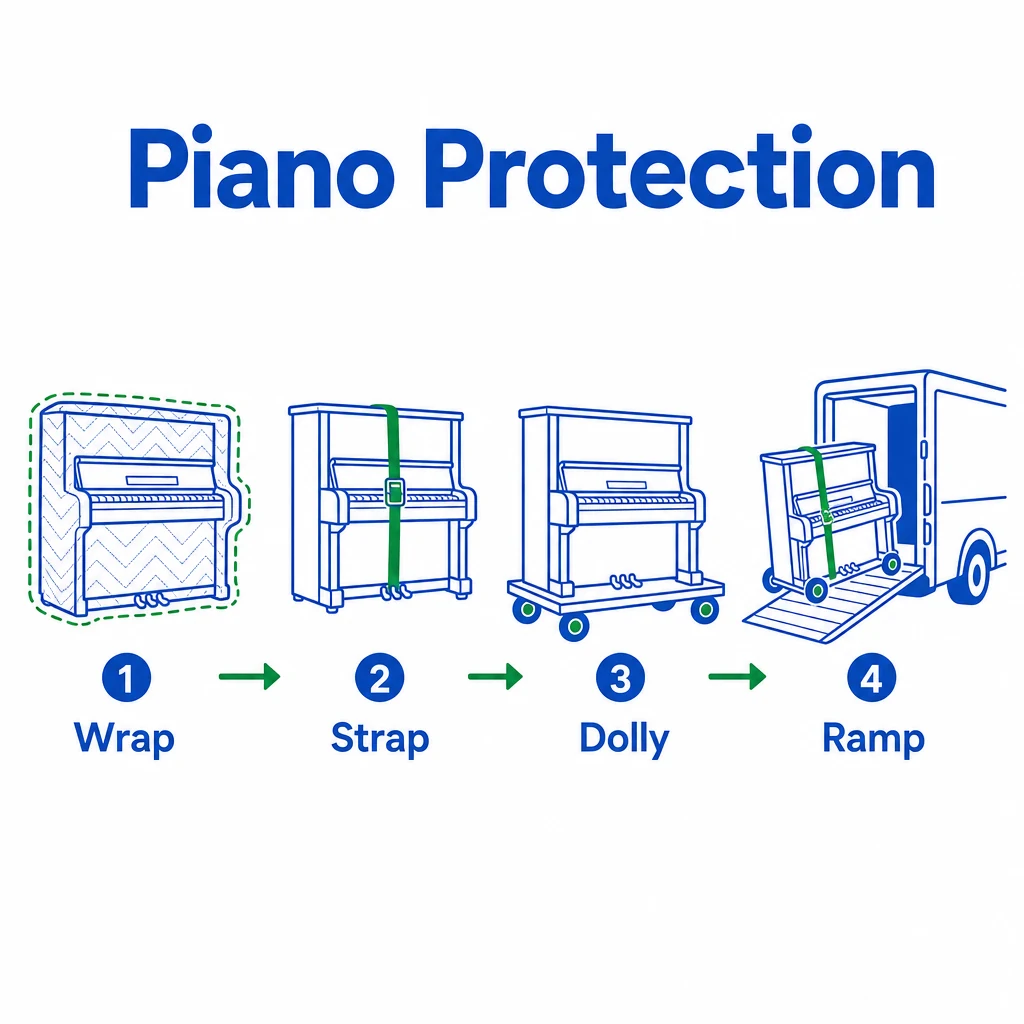
On the day, movers will normally protect the piano with padded covers or specialist blankets, secure parts that could move, and use suitable equipment such as straps, dollies, skates or trolleys where appropriate. The aim is to keep the piano controlled at all times rather than relying on strength alone.
Good movers also protect the property around the piano. This may include taking extra care around door frames, flooring, bannisters and entrance areas. Communication is important too: each person should know when to lift, pause, turn or lower the piano.
No professional can honestly say there is no risk at all, because every property and piano is different. However, a trained removal team uses planning, protection and controlled handling to keep that risk as low as possible.
Access matters as much as the piano itself
Many piano moves are won or lost on access. A piano might fit easily in one room but become difficult at a narrow doorway, a tight staircase or a small porch. That is why measuring and route planning are so important.
Before booking, it is helpful to check:
- The width of doorways, hallways and tight corners
- Whether there are steps inside or outside either property
- How close a removal van can park to the entrance
- Whether doors can be opened fully or temporarily removed if needed
- Any delicate flooring, low ceilings, sloped paths or obstacles
If the piano is being moved as part of a wider home move, it is worth discussing it early rather than leaving it as a last-minute detail. A domestic removal plan can then be built around the heavier, more specialist items. You can also use a moving house checklist to make sure important preparation tasks are not missed.

What you can do before the movers arrive
You do not need to dismantle or move the piano yourself. In most cases, it is better to leave handling to the removal team. However, there are several simple things you can do to make the move smoother.
- Clear the route from the piano to the exit, including rugs, plant pots, small furniture and loose items
- Keep pets and children safely away from the moving area
- Remove ornaments, lamps, music books and anything stored on or around the piano
- Tell the movers about any known weak flooring, tight turns or previous access problems
- Make sure someone is available to answer questions at both ends of the move
If the piano is one item within a larger move, it may be useful to discuss related items at the same time. For example, furniture removals can be planned alongside the piano so that the right equipment and vehicle space are available. If you only need a small number of items moved, a flexible small removals service may be suitable.

Can office or venue pianos be moved too?
Pianos are not only found in homes. They may also be located in offices, schools, community spaces, hospitality venues or performance areas. These moves can involve different access issues, such as lifts, loading bays, reception areas or shared entrances.
For business settings, planning is especially important because the move may need to work around opening hours, staff access or other equipment. The removal team may need to consider floor protection, building rules and the safest route through public or shared spaces.
If the piano is part of a wider workplace move, it can be planned alongside desks, storage units and other equipment. A company that handles commercial removals will understand the need for organisation, clear communication and careful sequencing.

What happens after the piano has been moved?
Once the piano is in place, it should be positioned carefully and left stable. Avoid placing it where it could be knocked during the rest of the move. If other furniture is still being carried in, it is sensible to keep the area around the piano clear.
Pianos can react to changes in temperature, humidity and movement. After relocation, many owners choose to let the instrument settle before arranging tuning. A professional tuner can advise on the best timing for your particular instrument.
If the move is part of a full household relocation, working with a team experienced in domestic removals helps ensure the piano is considered alongside the rest of your belongings, rather than treated as an afterthought.
- A piano can be moved safely when the route, access and equipment are properly planned.
- Professional movers protect both the piano and the property around it.
- Access details such as steps, tight corners and parking should be discussed before moving day.
- Owners can help by clearing routes and sharing any known access concerns.
- After the move, allow the piano to settle before arranging tuning advice.
Frequently asked questions
Can any removal company move a piano?
Not every removal company is set up for piano work. It is best to choose movers who have experience with pianos and the right equipment for controlled lifting and transport.
Do I need to empty or prepare the piano?
Remove loose items from the top or nearby area, but do not try to dismantle or lift the piano yourself. The movers will advise if anything specific is needed.
Will my piano need tuning after a move?
Many piano owners arrange tuning after relocation because movement and a new environment can affect the instrument. A tuner can advise when to book it.
Can a piano be moved upstairs or downstairs?
Often, yes, but stairs need careful assessment. The movers will consider the piano type, staircase width, turns, landings and safe handling requirements.
Need help moving a piano?
If you are planning a piano move, speak to Parkers Removals for friendly advice and a no obligation removals quote.