
A piano is not just another heavy item on moving day. It is a large, delicate instrument with polished surfaces, internal mechanisms, awkward weight distribution and parts that can be vulnerable if handled like ordinary furniture.
Professional piano removals focus on controlling that risk at every stage: assessing access, protecting the instrument, using the right equipment, loading carefully and keeping the piano stable in transit.
Why pianos need specialist handling
The main challenge with moving a piano is that it combines size, weight and sensitivity. An upright piano may look compact compared with other large household items, but it is dense, difficult to grip and often heavier at one side. Larger pianos can be even more demanding because their shape, legs, pedals and casing need careful support.
Inside the instrument are components that can be affected by sudden shocks, twisting, moisture and vibration. The exterior can also mark easily, especially on corners, edges, polished panels and decorative details. A scrape that might be minor on a basic cabinet can be much more noticeable on a piano.
This is why experienced movers treat a piano as a specialist item from the start. Parkers’ professional piano removals service is built around planned handling rather than simply adding extra people on the day.
Planning the route before anything is lifted
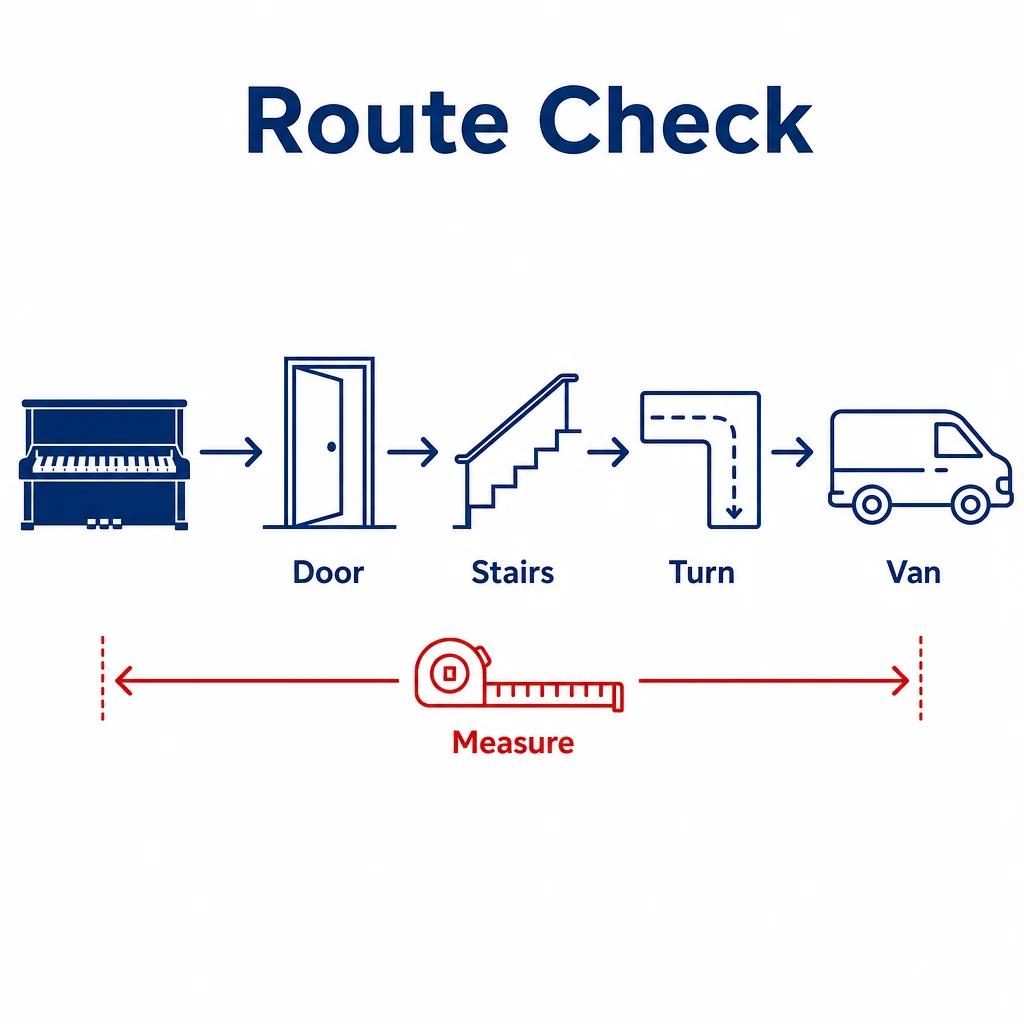
A good piano move begins before the wrapping starts. Movers need to understand where the piano is, where it is going and what obstacles sit between the two. That usually means looking at doorway widths, hallways, staircases, tight turns, flooring, driveways, lifts, thresholds and parking access.
This planning helps the team decide how the instrument should be protected and which equipment is needed. It also reduces unnecessary handling. Every extra turn, pause or change of direction creates another opportunity for a knock, so a clear route matters.
Professional movers will also consider the type of piano. Uprights, digital pianos and larger traditional instruments each need a different approach. Some can be moved in one protected piece, while others may require parts such as music stands or removable panels to be secured separately. The aim is always to keep the instrument controlled, balanced and supported throughout the move.
How movers wrap and protect the piano
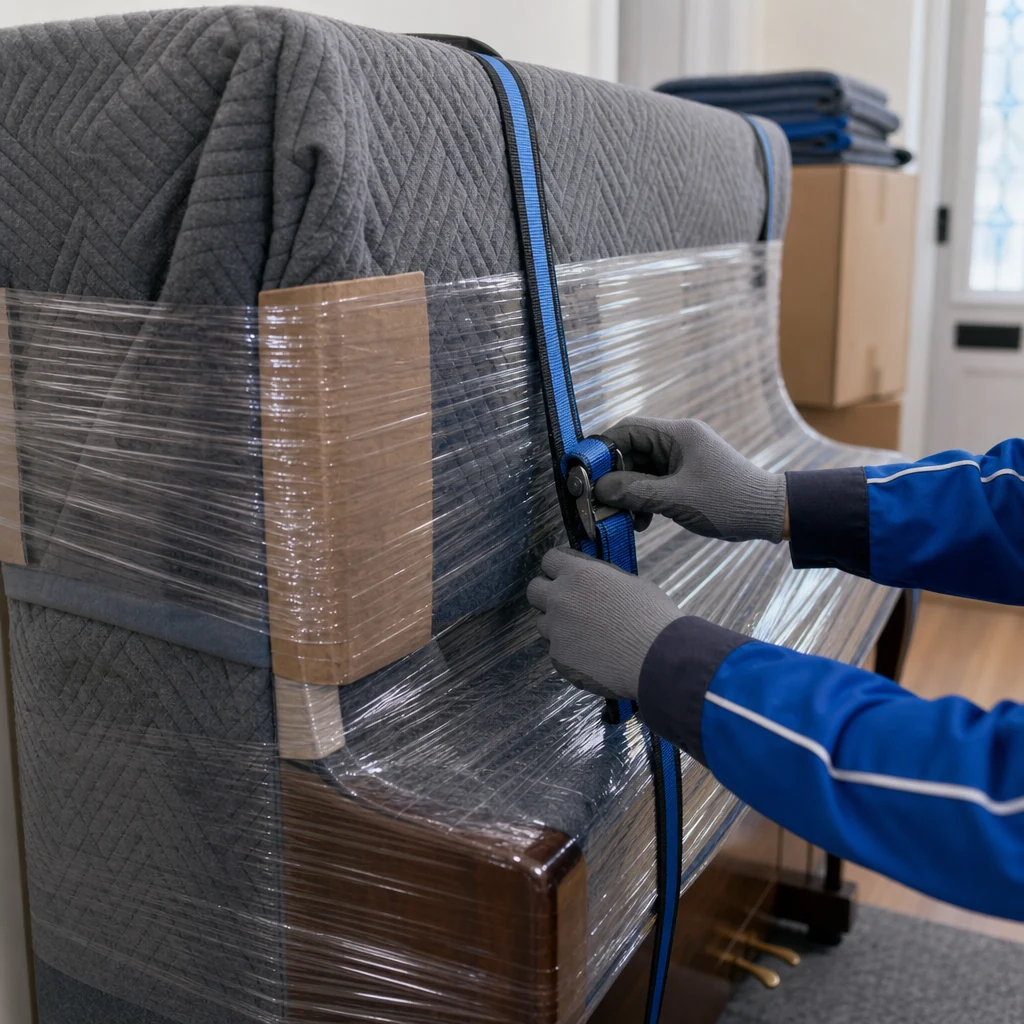
Wrapping is not just about covering the piano so it looks protected. It is about protecting the specific areas most likely to be damaged during handling. Corners, edges, pedals, legs, keys, lid sections and polished faces all need attention.
Professional movers commonly use layered protection. Soft moving blankets or padded covers help cushion the body of the instrument, while stretch wrap or securing bands can keep that padding in place. Where needed, extra protection may be used around corners and contact points. The keyboard lid should be closed and secured so it cannot swing open during movement.
Loose parts are dealt with separately. Anything that can rattle, slide or catch during the move should be removed, wrapped or secured. This is the same principle used when packing delicate household items, although a piano needs more structural planning than ordinary boxes. For smaller breakables travelling as part of the same move, Parkers’ guide to packing and protecting fragile items is a useful companion.
Using the right lifting and moving equipment
Trying to carry a piano by hand alone is where many risky moves go wrong. Even with several people, the weight can shift quickly if the team does not have the right equipment or a clear lifting method.
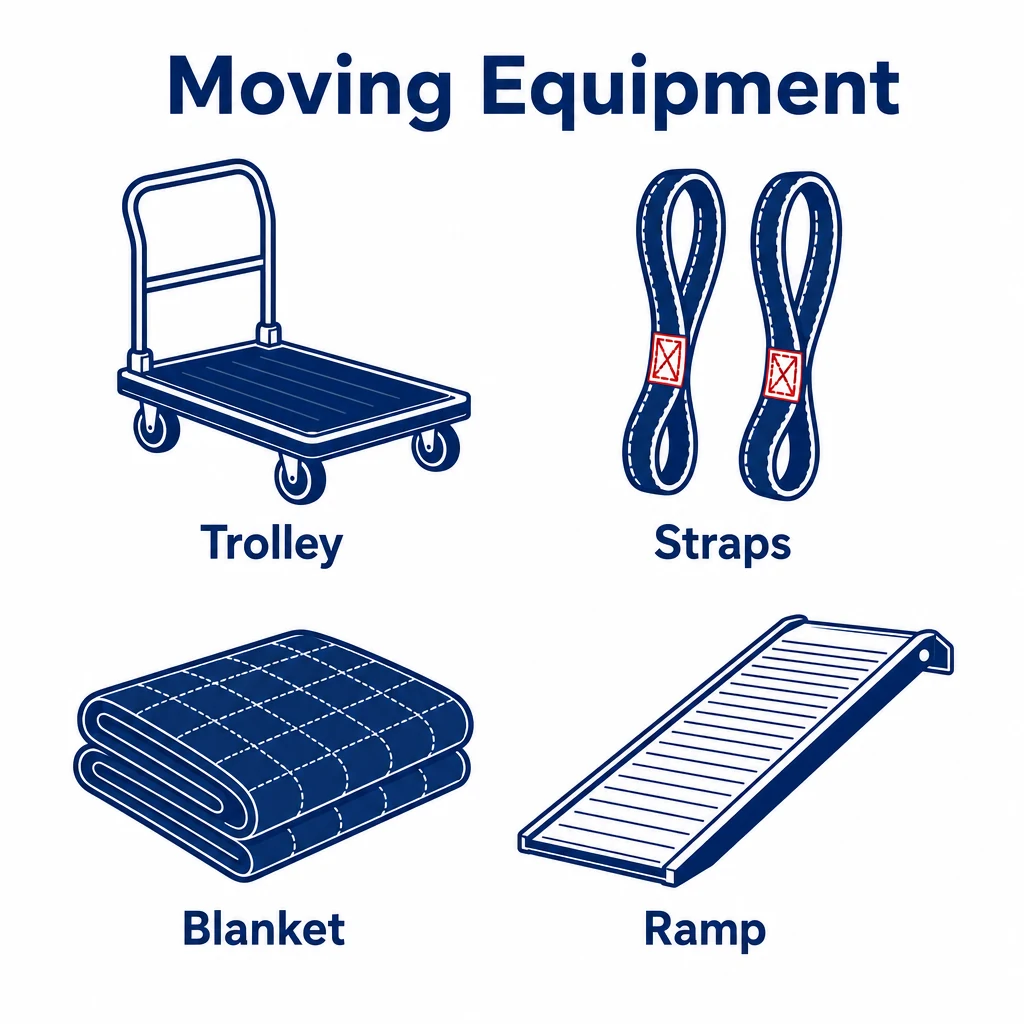
Professional movers use equipment chosen for the instrument and the access route. This can include piano skates, specialist trolleys, straps, ramps, protective floor coverings and lifting aids. The equipment is there to keep the piano stable, reduce strain on the movers and limit sudden changes in angle.
Stairs and steps need particular care. A piano should not be dragged, bumped or allowed to tilt unpredictably. The team needs to communicate clearly, move at a steady pace and keep control of both the weight and the direction of travel. This is one of the biggest differences between a specialist move and a general furniture lift.
Heavy does not always mean robust. Large mirrors, glass cabinets and pianos all need careful planning because shape and fragility matter as much as weight. Parkers’ advice on moving a large mirror safely explains the same idea from a different angle.
Loading the piano securely into the vehicle
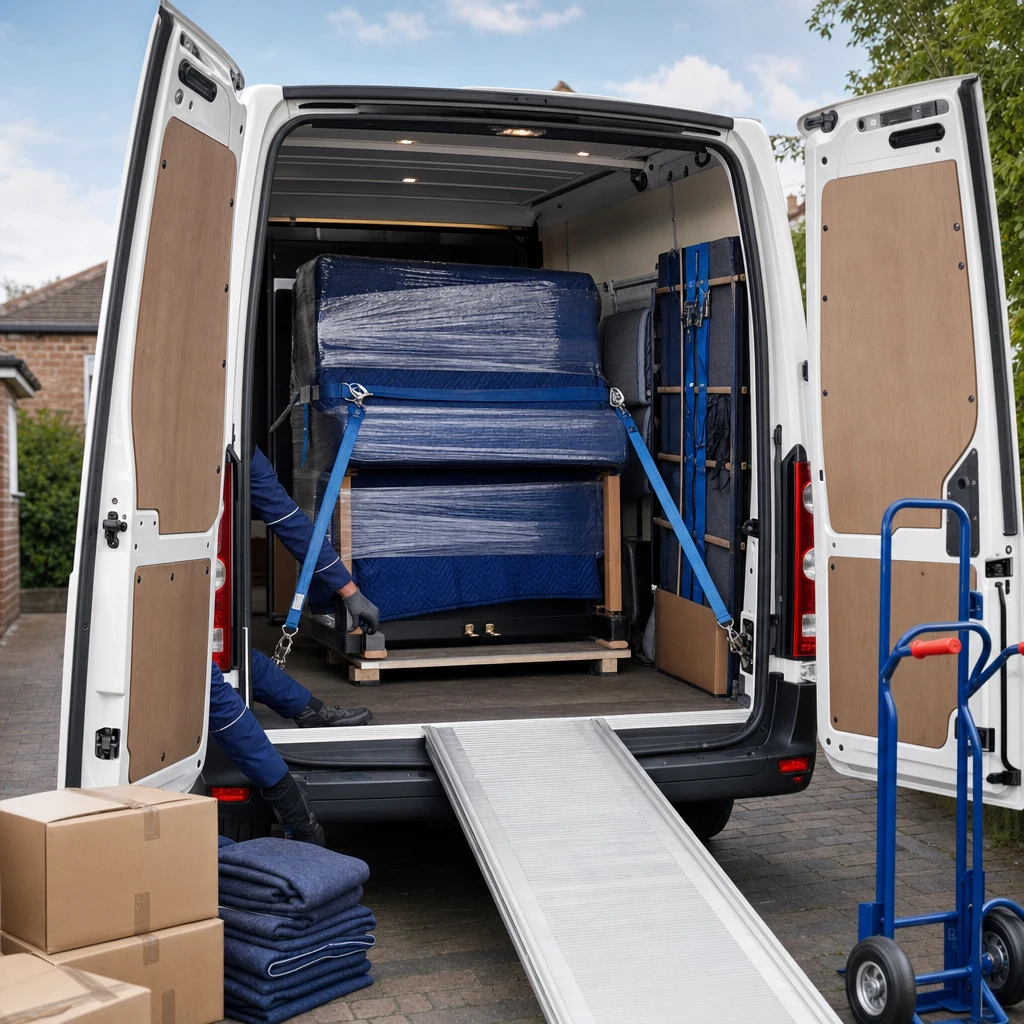
Once the piano reaches the vehicle, the job is not finished. Loading is a critical stage because the instrument needs to remain protected while it is moved up the ramp, positioned inside and secured for the journey.
A suitable removals vehicle gives the team space to load methodically. The piano should be kept upright where appropriate, positioned so it is not under pressure from other items, and secured to reduce movement. It should not be treated as a convenient surface for stacking boxes or furniture.
Good loading also considers the wider move. Heavy items need to be arranged so they do not shift, press into the piano or block safe unloading. Packing materials, blankets and straps all play a part, but so does judgement. The safest setup is one where the instrument is stable, cushioned and easy to unload in the correct order at the destination.
What happens after the piano arrives
Unloading deserves the same care as collection. The team should check the access route again, especially if the destination has different flooring, steps or tighter turns. Protective coverings can help reduce the risk of marks to floors and walls while the piano is brought inside.
Placement also matters. The piano should be set down gently, levelled where needed and positioned away from immediate hazards such as doors, busy walkways or unstable surfaces. Movers are not piano tuners, and many instruments benefit from settling after a move before tuning is arranged, but careful handling reduces the chance of avoidable knocks and movement-related stress.
If a piano is being moved on its own rather than as part of a full house or office move, a dedicated single-item approach can still be useful. Parkers’ single item removals can help when one important piece needs proper planning rather than being squeezed into a general collection.
- Pianos need specialist handling because they are heavy, awkwardly balanced and internally delicate.
- A safe piano move starts with access planning, not with lifting.
- Professional wrapping protects high-risk areas such as corners, pedals, keys and polished panels.
- The right trolleys, straps, ramps and vehicle loading methods reduce avoidable movement and impact.
- A piano should be positioned and secured carefully rather than treated like ordinary furniture.
Frequently asked questions
Can a piano be moved without specialist movers?
It may be physically possible in some simple situations, but it is rarely wise. Pianos are heavy, awkward and easy to damage if lifted, tilted or loaded incorrectly. Specialist movers bring the planning, protection and equipment needed to reduce the risk.
Do upright pianos need the same care as larger pianos?
Yes. Upright pianos may take up less floor space, but they are still dense, delicate instruments with vulnerable finishes and internal mechanisms. They need controlled handling, proper wrapping and secure transport.
Should a piano be tuned after moving?
Many piano owners arrange tuning after the instrument has settled in its new position. Movers focus on safe transport and careful placement, while a qualified tuner can advise on tuning once the piano is in its new environment.
What should I do before the movers arrive?
Clear the route around the piano, remove loose items from nearby surfaces and tell the removals team about steps, tight turns, parking issues or access restrictions. Leave the actual lifting and wrapping to the professionals.
Planning a piano move?
Parkers can help you move your piano with the care, equipment and planning it deserves. Get in touch for friendly advice and a no obligation removals quote.